
Jagannath Rath Yatra Story, Meaning & Why It's Celebrated
Jagannath Rath Yatra 2026: Story, Meaning and Why It Is Celebrated

The Jagannath Rath Yatra story is one of the oldest and most emotionally resonant narratives in Hindu tradition - a story about a king's dream, a divine promise, and the love between a god and the people who could not reach him inside the temple. Every year on the Dwitiya Tithi of Ashadha Shukla Paksha, the three wooden deities of Lord Jagannath, his brother Balabhadra, and his sister Subhadra leave the inner sanctum of the Puri temple and step into the world - onto massive chariots, pulled by the hands of ordinary devotees down a three-kilometre road. In 2026, Rath Yatra falls on Thursday, 16 July. In this blog, you will discover the full story behind the festival, what it means spiritually, and why a billion hearts still feel its pull every single year. Jagannath Rath Yatra is a sacred Hindu festival where Lord Jagannath travels in a chariot to Gundicha Temple, symbolizing divine accessibility and devotion.
Rath Yatra 2026 - Key Facts at a Glance
|
Detail |
Information |
|
Rath Yatra 2026 Date |
Thursday, 16 July 2026 |
|
Tithi |
Ashadha Shukla Dwitiya |
|
Bahuda Yatra (Return) |
Friday, 24 July 2026 |
|
Festival Duration |
9 days |
|
Primary Location |
Puri, Odisha |
|
Distance Travelled |
Approximately 3 km - Jagannath Temple to Gundicha Temple |
|
Scriptural References |
Brahma Purana, Padma Purana, Skanda Purana |
The Jagannath Rath Yatra Story - From Dream to Divinity

The story of why Rath Yatra is celebrated begins with a king named Indradyumna and his queen, Gundicha, who were devoted followers of Lord Krishna. One night, Lord Krishna appeared in the king's dreams and asked to be worshipped in wooden form, alongside his brother Balabhadra and sister Subhadra. The king woke before dawn with a burning sense of purpose and immediately summoned the divine architect Vishwakarma to carve the three idols from sacred neem wood. This Jagannath Rath Yatra story has been passed down through scriptures and oral traditions for centuries.
The Unfinished Idols and the Voice from the Sky
Vishwakarma agreed to take on the task, but with one condition - the door to the workshop must remain shut until the work was complete. Days passed. Queen Gundicha, consumed by curiosity and devotion, could not wait. She asked the king to open the door before the sculptor had finished.
When the door opened, they found three beautiful but incomplete idols - without fully formed hands or feet. The king was stricken with grief. Then, an akashvani (a voice from the heavens) spoke: "Do not be troubled, O King. These idols are not unfinished. This is the form in which I choose to appear in Kalyuga - without distinction of birth, rank, or reach. Dress them. Place them in a temple. From this day, I am Jagannath - Lord of the Universe."
A grand temple was built. The sky, according to tradition, showered flowers on that day.
Why the Deities Come Out of the Temple
As the years passed, Lord Jagannath noticed that Queen Gundicha grew quietly sad. When he asked her why, she confessed: "It is a mother's wish to have her children visit her." Moved by her love, Jagannath smiled and made a promise: "From now on, Balabhadra and I will be your sons. Every year, we will come to you."
That promise is fulfilled every single year at Rath Yatra. The Gundicha Temple - where the deities travel and stay for seven days - is referred to in tradition as the aunt's home or the mother's home. The procession is not simply a festival. It is a god keeping a promise.
The Deeper Meaning Behind the Chariot Festival

The Meaning of "Jagannath"
The name Jagannath comes from two Sanskrit words - Jagat (universe) and Nath (lord or master). Together, the name means Lord of the Universe. What makes Jagannath distinct from most deity traditions is that his worship has never been bound by caste, creed, or birth. The Jagannath Temple in Puri is one of the few places in ancient India where the Mahaprasad - the sacred food cooked in the temple kitchen - was traditionally offered and accepted by people of all communities without distinction.
The Meaning of the Rath Yatra Journey
The journey of the chariot from the Jagannath Temple to the Gundicha Temple carries a layered meaning that different devotional traditions interpret in different ways. In the Vaishnava understanding - particularly within the tradition of Sri Chaitanya Mahaprabhu, who famously danced before the Rath Yatra chariots in Puri - the festival re-enacts the moment when Shrimati Radharani and the gopis of Vrindavan drew Lord Krishna back toward them after a hundred years of separation at Kurukshetra. Pulling the chariot rope is understood as the devotee drawing their beloved Lord back home - a gesture of love, not worship from a distance.
The Skanda Purana and Brahma Purana both describe the Rath Yatra as one of the most meritorious acts a devotee can witness or participate in. The Brahma Purana states that even seeing the chariot from a distance generates immense spiritual merit.
Why the Wooden Idols Have No Complete Hands or Feet
The unfinished form of the Jagannath idol is not an accident or an aesthetic choice - it is a theological statement. In Kalyuga, tradition holds, the divine has chosen to appear in a form that is accessible to everyone - imperfect in human terms, but infinitely compassionate in divine ones. Jagannath's round eyes see everything; his open, formless arms embrace everyone. The idol's appearance is a reminder that the divine does not keep itself at a decorative distance.
Why Rath Yatra Is Celebrated - The Spiritual and Social Meaning
Equality Before the Divine
The most powerful social message of the Rath Yatra is expressed in the Chera Pahara ritual - the moment when the Gajapati King of Puri, the most powerful person in the Kalinga kingdom by tradition, dresses as a sweeper and personally sweeps the path of the chariot with a golden broom. This ritual, performed at the beginning and end of the Yatra, declares openly: before Jagannath, every being - king or servant - stands equal.
In a tradition where caste hierarchies shaped social access to temples for centuries, Rath Yatra was the great equaliser. On this day, the deity came out to the street - where everyone could see, touch the rope, and pull.
The Promise of Liberation
According to the Skanda Purana, anyone who pulls the rope of Lord Jagannath's chariot - even for a single moment - is freed from the cycle of birth and death. Witnessing the chariot is held to be equivalent to performing great yagnas. It is why over a million devotees come to Puri every year from across India and the world, and why processions now take place in ISKCON temples globally since 1968.
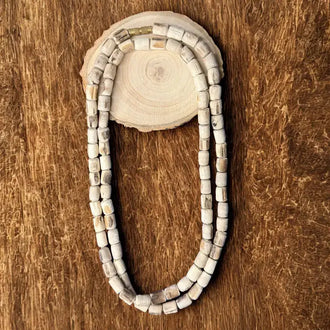
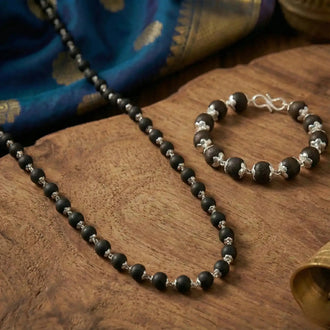
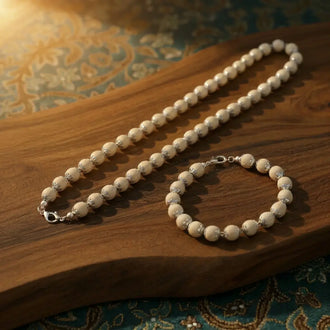
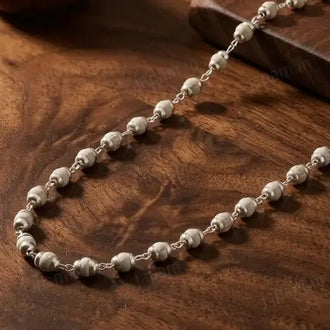
Explore the sacred wearables collection - Tulsi malas, Rudraksha malas, and Krishna pendants blessed at India's holiest dhams - ideal for devotees who carry Jagannath's blessing in their daily lives.
The Rituals That Complete the Rath Yatra

Snana Purnima - The Bathing Ceremony
Eighteen days before Rath Yatra, on the full moon day of Jyeshtha, the three deities are brought out and ceremonially bathed with water drawn from 108 pots from the Suna Kua (the Golden Well). This ritual, called Snana Purnima, purifies the deities before the journey.
Anasara - The Period of Rest and Recovery
After the bathing, the deities are kept away from public view for approximately two weeks - a period called Anasara. Tradition holds that the extensive bathing makes them unwell, and they rest in private, attended only by special servitors who offer roots, leaves, and fruits. This is a deeply human quality attributed to the divine - vulnerability, recovery, preparation.
Pahandi and the Journey Begins
On the day of Rath Yatra itself, the deities are brought out of the temple in a ceremony called Pahandi - a slow, swaying procession accompanied by chanting, drums, and cymbals. They are placed on their respective chariots. The Silver Plated Bansuri for Thakurji - a sacred offering for Vaishnava devotees - carries the essence of this tradition into your own home mandir. During the Rath Yatra, the sound of Krishna's flute is understood to call every devotee's heart forward. The Gajapati King performs Chera Pahara. And then - the ropes are pulled.
Suna Besha - The Golden Adornment
On their return to the Jagannath Temple after seven days at the Gundicha Temple, the three deities are adorned with gold jewellery weighing nearly 208 kg. This ceremony, called Suna Besha, was first performed by King Kapilendra Deva in 1460 CE, and continues to be one of the most visually spectacular moments of the entire festival.
Bring the Rath Yatra Blessing Into Your Home

Not everyone can stand on the Grand Road of Puri on 16 July. But devotion has never needed geography. Setting up your home mandir with genuine, blessed items - lighting a diya and chanting Lord Jagannath's names - creates a sacred space that holds the spirit of the Yatra wherever you are. Dharmik's Original Tulsi Combo - Tulsi Kanthi Mala and Japa Mala is sourced from Vrindavan, the very land that Jagannath's gopi devotees longed to bring him back to. And the 5 Mukhi Rudraksha Mala carries the protective vibration of Lord Shiva - whose presence in Puri, as Kshetra Pala (guardian of the region), is inseparable from Jagannath's story.
Read also: How to set up your home mandir the right way
Frequently Asked Questions (FAQ)
What is the story of Jagannath Rath Yatra?
The Jagannath Rath Yatra story begins with King Indradyumna of Puri, who received a divine dream instructing him to build wooden idols of Lord Krishna, Balabhadra, and Subhadra. When the idols were discovered before completion, a heavenly voice declared them perfect - and Jagannath (Lord of the Universe) was born. Every year, the deities travel from the Jagannath Temple to the Gundicha Temple to fulfil a promise made to Queen Gundicha - that the Lord would come to her like a son visiting his mother.
What is the meaning of Rath Yatra?
The meaning of Rath Yatra is the "journey of the chariot" - from Sanskrit Ratha (chariot) and Yatra (journey or pilgrimage). Spiritually, it represents the moment devotees draw their beloved Lord out of the inner sanctum and into the open - accessible to all, regardless of caste or status. In the Vaishnava tradition, it re-enacts the longing of the gopis of Vrindavan who drew Lord Krishna back toward them through their love, pulling his chariot with their devotion.
Why is Rath Yatra celebrated?
Rath Yatra is celebrated to commemorate the annual journey of Lord Jagannath, Balabhadra, and Subhadra from the Jagannath Temple to the Gundicha Temple - their aunt's sacred home - approximately 3 km away in Puri. It honours a divine promise, affirms the principle of equality before God, and creates the opportunity for every devotee to have darshan of the Lord outside the temple. According to the Brahma Purana and Skanda Purana, witnessing this journey grants immense spiritual merit.
When is Jagannath Rath Yatra 2026?
Jagannath Rath Yatra 2026 falls on Thursday, 16 July 2026, on the Dwitiya Tithi of Ashadha Shukla Paksha. The nine-day festival concludes with Bahuda Yatra - the return journey of the deities - on Friday, 24 July 2026. The primary celebration takes place in Puri, Odisha, but Rath Yatra processions are also held in major cities across India and globally through ISKCON since 1968.
Why do the Jagannath idols have no complete hands and feet?
The wooden Jagannath idol was left unfinished because Queen Gundicha asked that the workshop door be opened before the divine sculptor Vishwakarma had completed his work. Rather than continuing, a heavenly voice declared the form perfect for Kalyuga - the age in which the divine would appear in an accessible, non-hierarchical form. The open, formless arms of Jagannath are understood to embrace every devotee equally, without distinction of birth, caste, or spiritual standing.
Conclusion
The Jagannath Rath Yatra story is ultimately a story about access - about a god who chose to leave the inner sanctum and come to the street, because not everyone could reach the sanctum. It is about a king who swept the road for his Lord. It is about a queen who was given the greatest gift a mother can receive. And it is about millions of hands - ordinary, devoted hands - pulling a rope together, as if to say: come home. Rath Yatra 2026 falls on 16 July - whether you travel to Puri or create your own sacred space at home, let the day be one of genuine devotion.
Explore Dharmik's Silver Plated Krishna Mantra Shankh Pendant and Sacred Wearables collection - abhimantrit at India's holiest dhams, delivered free across India.
By Nayan Khetawat, Dharmik