
Spiritual Meaning of Rath Yatra 2026: Divine Path to Moksha

Have you ever felt a divine calling that pulls at your soul, urging you to seek a deeper connection with the universe? The festival of chariots, known as Rath Yatra, is not merely a grand public spectacle; it is a manifestation of the Spiritual Meaning of Rath Yatra that resonates through the hearts of millions. As the massive wheels of the chariots roll across the sacred earth of Puri, they symbolize the movement of the soul through the cycles of time and existence. This ancient tradition serves as a powerful engine for karmic cleansing and spiritual awakening, inviting every participant to witness the Lord of the Universe stepping out of His temple to embrace all of humanity. In the chaos of the crowd and the rhythmic chanting of names, one finds a path toward inner transformation, where the physical act of pulling a rope becomes a metaphorical climb toward the higher self. Understanding this sacred event can illuminate your own journey, helping you navigate the complexities of life with the steady hand of devotion and the promise of eventual moksha.
This comprehensive guide by Dharmik will explore the soul-level layers of this festival, detailing how the Spiritual Meaning of Rath Yatra connects our daily actions to the eternal search for liberation, ensuring that every devotee experiences a profound shift in consciousness through divine grace.

The Scriptural Foundation: Rath Yatra in the Vedic Tradition
The spiritual significance of the Rath Yatra is deeply embedded in the ancient Shastras, providing a framework for understanding our existence beyond the material plane. As mentioned in the Katha Upanishad, the human body is compared to a chariot, where the soul is the passenger and the intellect is the driver. This aligns with the wisdom found in the Bhagavad Gita, where Lord Krishna serves as the charioteer for Arjuna, guiding him through the battlefield of life. The Rath Yatra brings this scriptural metaphor to life in the most magnificent way possible. The festival originates from the sacred Dham of Puri, one of the four most holy sites in India, and its energy radiates to every corner of the world. It explains that the spiritual relevance today lies in the Lord's accessibility—stepping out of the sanctum sanctorum to meet those who cannot enter. This is a profound soul-level significance that emphasizes that God is not confined to a building but moves through the world, seeking out the devoted heart. To bring this energy of sacred Dhams into your personal space, you might explore the Monthly Vrindavan Puja Kit (for sincere Krishna devotees), which helps maintain a consistent spiritual connection at home.
When is Spiritual Meaning of Rath Yatra 2026?
| Date | July 16, 2026 |
| Tithi | Ashadha Shukla Paksha Dwitiya |
| Timing / Muhurat | Sunrise to Sunset (Pradosh Kaal for special prayers) |
| Location | Puri, Odisha (Main Hub) and worldwide celebrations |
| Ritual Highlights | Pahandi Bije (carrying deities), Chhera Pahanra (sweeping of chariots), and Pulling the Chariots |
The Chariot as the Human Body: A Core Aspect of Rath Yatra Symbolism
At the heart of the Spiritual Meaning of Rath Yatra is the intricate symbolism of the chariot itself, which represents the human physical and subtle bodies. This analogy serves as a reminder that our life is a journey back to the source, and our body is the vehicle for that journey. The chariot of Lord Jagannath, known as Nandighosha, stands tall with sixteen wheels, representing the sixteen 'Kalas' or attributes of the mind and senses. The process of building these chariots anew each year from specific Neem wood symbolizes the constant renewal of the soul and the impermanence of the physical form. When we contemplate the chariot, we are prompted to reflect on who is truly driving our life—our uncontrolled desires or our higher spiritual intellect.
- The Driver: Represents the 'Buddhi' or intellect, which must be sharp and focused to guide the horses of our senses.
- The Horses: Symbolize the 'Indriyas' or senses, which are naturally wild and must be harmonized through discipline.
- The Ropes: Represent the mind, the link through which the intellect controls the senses and steers the soul toward the Divine.
- The Passenger: The deity inside represents the 'Atman' or soul, the silent observer of the entire journey.
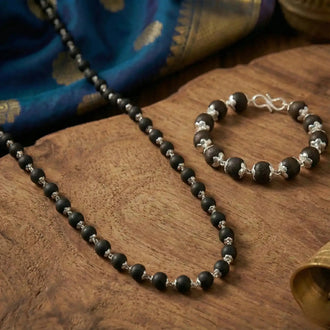
Spiritual Insight / Vrindavan Tradition Note: In the Gaudiya Vaishnava tradition of Vrindavan, the Rath Yatra is viewed through the lens of 'Vipralambha Bhava'—the mood of separation. It symbolizes the devotees of Vrindavan trying to pull Krishna back from the opulence of Dwarka to the simple, love-filled groves of Vraja. This emotional layer adds a dimension of 'Prem' (divine love) to the Spiritual Meaning of Rath Yatra, teaching us that the ultimate goal of all discipline is to cultivate a heart that yearns for the Divine. To support this focus on internal discipline and meditation, using an Tulsi Japa Mala with 108 Original Big Beads for Meditation can be a transformative practice, helping you harness the mind during your daily Sadhana.
Understanding Rath Yatra Karma Moksha Meaning
The Rath Yatra Karma Moksha meaning is a central theme for every seeker participating in the festival. Karma is the law of cause and effect that keeps the soul bound to the material world, while Moksha is the ultimate liberation from this cycle. The act of seeing the Lord on His chariot (Rath Darshan) is said to be so powerful that it can wipe away lifetimes of accumulated negative karma. It is believed that 'Rathe tu vamanm drustva punarjanmam na vidyate'—anyone who sees the Lord on the chariot will not be born again. This doesn't mean we stop acting, but rather that we learn to act without attachment, turning our 'Karma' into 'Karma Yoga.' The festival teaches us that even the most difficult path can be traversed if we are moving toward the Divine destination of the Gundicha Temple, which symbolizes the pure state of the soul.
- Purification: The vibration of the drums and chants serves to cleanse the mental atmosphere, removing the dust of worldly desires.
- Detachment: As the Lord leaves His palace, we are reminded to leave behind our attachments to status and ego.
- Surrender: The heavy pulling of the chariot requires total physical and mental surrender to the will of the Lord.
- Liberation: Reaching the destination signifies the soul's successful return to its original home, free from the bonds of birth and death.
Spiritual Insight / Vrindavan Tradition Note: In the Bhakti tradition, Moksha is not just the end of rebirth, but the beginning of eternal service to the Lord. The Rath Yatra illustrates that the path to liberation is paved with 'Seva' or selfless service. Whether it is sweeping the path or pulling the ropes, every action becomes a step toward Moksha. To protect your spiritual progress and stay aligned with this path, many devotees wear a Premium and Authentic Rudraksha Mala & Panch Mukhi Rudraksha Bracelet Combo - Blessed in Kashi, which provides a protective shield against negative influences while enhancing focus.
The Symbolism of Pulling Rath: Bridging the Divine and Devotee
The act of pulling Rath spiritual meaning is a visceral experience of the bridge between the human effort and divine grace. While the chariots are massive and require the strength of thousands, it is said that the Lord moves only when He is pleased by the devotion of His followers. This signifies that while we must exert our 'Purushartha' (human effort), the ultimate success of our spiritual journey depends on 'Kripa' (grace). The ropes of the chariot are known as the 'ropes of salvation,' and touching them is considered a privilege that can transform one's destiny. It is a collective movement where the boundaries of 'I' and 'mine' dissolve into a sea of 'We' and 'He.'
- The Equality of Souls: On the ropes of the Rath, a king and a beggar pull side by side, symbolizing that in the eyes of the Divine, all souls are equal.
- The Overcoming of Ego: Pulling the chariot is an exhausting task that humbles the ego, making one realize their smallness in the face of the Infinite.
- Unity of Purpose: The synchronized effort of the crowd reflects the power of 'Satsang' or the company of the holy, which makes the difficult journey of life easier.
- Direct Access: The pulling allows the devotee to physically 'carry' the Lord in their heart, creating an unbreakable bond.
Spiritual Insight / Vrindavan Tradition Note: The tradition of 'Chhera Pahanra,' where the King of Puri sweeps the floor before the chariots, is a profound lesson in humility. It teaches that no position is too high to serve the Lord. In Vrindavan, this spirit of servitude is the essence of life. To carry a symbol of this universal protection and divine connection, the Gold Plated Om Pendant With Chain serves as a constant reminder of the sound of the universe that guides our every pull in life.

Rath Yatra and the Path of Bhakti: Divine Grace for Inner Transformation
The Spiritual Meaning of Rath Yatra is most vibrantly expressed through the path of Bhakti. This festival is the ultimate 'Darshan' (vision), where the Lord comes out to meet those who were perhaps shunned or unable to enter the temple. This act of 'Patita Pavana' (purifier of the fallen) shows the boundless compassion of the Divine. Inner transformation happens when we realize that the Divine is not distant or judgmental but is eagerly moving toward us. The joy, the tears, and the ecstatic dancing during the Yatra are all symptoms of a soul that is waking up to its eternal relationship with God. This transformation is not temporary; it leaves a lasting impression that alters how we view our daily struggles and our fellow human beings.
- Kirtan as Catalyst: The loud chanting of the Mahamantra during the Yatra acts as a sonic cleansing, penetrating the deep layers of the subconscious.
- The Power of Mahaprasad: Sharing the Lord's food during this time breaks down social barriers and nourishes the soul with spiritual energy.
- Vision of the Lord: Capturing the image of the Lord on the chariot in the mind's eye provides a focus for meditation that lasts a lifetime.
- The Journey Within: The physical movement of the deities is mirrored by the movement of the devotee's consciousness from the external world to the inner sanctuary.
Spiritual Insight / Vrindavan Tradition Note: In the mood of Vrindavan, the Rath Yatra is the 'Vraja-gamana'—the return to the heart. It is the most emotional time for a devotee, as they feel they are finally bringing the Lord back to the garden of their soul. To commemorate this divine grace and keep the blessings of the holy land with you, the Vrindavan Prasad Box (Braj Raj included) offers a physical connection to the sacred soil that the Lord Himself walks upon.
Comparison of Spiritual Tools for the Rath Yatra Journey
| Type | Purpose | Best For | Recommended Product |
| Meditation Aid | Focused chanting and breath control during spiritual journey. | Daily practitioners seeking mental clarity. | Original 5 Mukhi Rudraksha Mala 108+1 Beads, 4 mm, Daily Meditation, Blessed in Kashi |
| Devotional Offering | Purifying the home environment to match temple vibrations. | Families performing home-based Rath Yatra puja. | Incense Cups - Purity, Blessings & Peace |
| Sacred Protection | Wearing a shield to ward off karmic obstacles. | Those navigating difficult life transitions or spiritual blocks. | Original Narasimha Raksha Mala Double Round, 8 mm, Divine Protection |
Embracing the Rath Yatra Spirit: Practical Preparations for Home Puja
Bringing the Spiritual Meaning of Rath Yatra into your home allows you to participate in the cosmic energy of the festival regardless of your physical location. By performing a dedicated puja, you create a portal of grace in your living space, inviting Lord Jagannath, Balabhadra, and Subhadra to reside in your heart and home. This practice helps in internalizing the lessons of self-control and devotion that the festival teaches.
Mandir Setup Process
- Direction and Cleaning: Choose the North-East corner of your home. Clean the area with water and a drop of Ganga Jal to sanctify the space.
- Altar Placement: Place a yellow or red cloth on a raised platform. Set the images or idols of the Holy Trinity (Jagannath, Balabhadra, Subhadra) in the center.
- Symbolic Chariot: You can place a small wooden chariot or even a representation made of flowers to symbolize the Rath.
- Floral Adornment: Use Tulsi leaves, marigolds, and lotuses. Lord Jagannath is especially fond of Tulsi.
Puja Samagri List
- Idols/Pictures of the Jagannath Trinity
- Chandan (Sandalwood paste)
- Incense and Ghee lamp
- Fresh fruits and sweets (Poda Pitha if possible)
- Ganga Jal and a small bell
- Tulsi Manjari and flowers
Step-by-Step Ritual Sequence
- Deepam: Light the ghee lamp to signify the removal of spiritual darkness.
- Avahanam: Softly chant "Om Jagannathaya Namaha" to invite the Lord's presence into your home.
- Chhera Pahanra (Miniature): Use a small new broom to symbolically sweep the area before the idols, practicing the humility of the King of Puri.
- Chanting: Perform 1-round of Japa using your mala, focusing on the intention of 'Karmic Cleansing.'
- Arati: Perform the arati while singing devotional songs, offering the five elements back to the Creator.
- Pushpanjali: Offer flowers at the feet of the Lord, surrendering your ego and desires.
Spiritual Resonance: Journeying Towards Inner Liberation
The Spiritual Meaning of Rath Yatra eventually leads to a point of deep emotional reflection. It asks us to consider the state of our own internal chariot. Are our senses leading us toward the chaotic noise of the world, or is our intellect guiding us toward the peaceful temple of the soul? This festival is a devotional reinforcement that reminds us that while the road may be dusty and the crowd may be thick, the Lord is always visible on the high seat of the chariot, waiting for us to just look up. It is a framing of inner transformation where the 'yatra' or journey is more important than the destination, for it is in the journey that our faith is tested and our love is proven. As we watch the Lord return to His abode, we are left with a lingering sense of peace and a renewed purpose to live a life of dharma. How will you steer your internal chariot this year to ensure it moves closer to the light of divine truth?
Bring the Spiritual Meaning of Rath Yatra Home with Dharmik
At Dharmik, we believe that every home should be a sanctuary of divine grace. To help you celebrate the Spiritual Meaning of Rath Yatra, we offer authentic products that are energized and direct from sacred Dhams. Our Original 5 Mukhi Rudraksha Mala 108+1 Beads, 4 mm, Daily Meditation, Blessed in Kashi is a perfect companion for those seeking to ground their energy during the festival. For your home altar, the Krishna Murti Gold-Plated Lord Krishna Idol (Blessed in Vrindavan) brings the beauty and grace of the Lord into your daily sight. Our products are lab-certified and abhimantrit in Vrindavan, ensuring that the spiritual vibrations are intact. Let these sacred tools be the ropes that help you pull the Divine into your life every single day.
Frequently Asked Questions About the Spiritual Meaning of Rath Yatra
What is the spiritual meaning of pulling the Rath?
The spiritual meaning of pulling the Rath signifies the individual's effort to overcome the material world and return to their spiritual roots. It represents the surrender of the ego and the use of one's physical strength to serve the Divine, which is believed to cleanse past karma and bring one closer to moksha.
How does Rath Yatra help in achieving moksha?
Rath Yatra helps in achieving moksha by providing a moment of total immersion in divine consciousness. According to scriptures, seeing Lord Jagannath on His chariot removes the need for rebirth by purifying the soul's intentions and burning away the seeds of future material desires through divine grace.
What does the chariot symbolize in Rath Yatra?
The chariot in Rath Yatra symbolizes the human body as described in the Upanishads. The wheels represent the cycles of time, the horses represent the senses, the reins represent the mind, and the deity sitting within represents the Atman or the individual soul being guided by the Divine.
What is the significance of Lord Jagannath in Rath Yatra?
The significance of Lord Jagannath in Rath Yatra is that He is the 'Lord of the Universe' who steps out to meet everyone. This symbolizes the inclusivity of the Divine and the idea that God is accessible to all, regardless of status, caste, or background, through the path of pure devotion.
How can one connect with the spiritual meaning of Rath Yatra at home?
One can connect with the spiritual meaning of Rath Yatra at home by setting up a dedicated altar, performing a symbolic sweeping ritual (Chhera Pahanra), chanting the names of the Lord, and meditating on the chariot's symbolism of the body and soul, thereby internalizing the festival's lessons.
Why is the Rath Yatra considered a journey of karma?
Rath Yatra is considered a journey of karma because it mirrors the soul's movement through different life experiences. By participating in the Yatra, devotees believe they are performing 'Akarma' or action without attachment, which is the key to breaking the karmic cycle and attaining spiritual freedom.
Conclusion: Embracing the Enduring Spiritual Meaning of Rath Yatra
The Rath Yatra is far more than an annual event; it is a timeless blueprint for spiritual evolution. By understanding the Spiritual Meaning of Rath Yatra, we learn that our lives are not random, but part of a divine procession toward liberation. The chariot, the ropes, and the path all point toward the same truth: that through devotion and self-control, we can navigate the world while keeping our eyes fixed on the Divine. Whether you are pulling the ropes in Puri or lighting a lamp in your home, the grace of Lord Jagannath is equally available. May this festival inspire you to cleanse your karma, embrace your dharma, and finally reach the peaceful shores of moksha. Explore Dharmik's collection of authentic puja essentials to keep the spirit of this sacred journey alive in your heart forever.
By Dharmik