
Navratri Bhog List: Complete Day-Wise Guide for Maa Durga
Navratri is not just nine days of fasting; it is nine days of conscious offering. Each day, a different form of Maa Durga is worshipped, and each form has a specific bhog that pleases her. This tradition is not arbitrary. The food offered each day carries symbolic meaning connected to that goddess's energy, her story, and the blessings she bestows. Getting the bhog right is one of the simplest and most meaningful ways to deepen your Navratri practice.
Here is the complete, authentic Navratri bhog list for Chaitra Navratri 2026, from March 19 to March 26.

Complete Navratri Day-Wise Bhog Table 2026
| Day | Date | Goddess | Bhog | Blessing |
|---|---|---|---|---|
| Day 1 | March 19 | Maa Shailputri | Desi Ghee | Good health, disease-free life |
| Day 2 | March 20 | Maa Brahmacharini | Sugar / Mishri | Long life, family well-being |
| Day 3 | March 21 | Maa Chandraghanta | Milk / Kheer | Removal of sorrow, courage |
| Day 4 | March 22 | Maa Kushmanda | Malpua | Happiness, prosperity |
| Day 5 | March 23 | Maa Skandamata | Banana | Wisdom, child’s well-being |
| Day 6 | March 24 | Maa Katyayani | Honey | Charisma, removal of obstacles |
| Day 7 | March 25 | Maa Kalaratri | Jaggery (Gud) | Protection, fearlessness |
| Day 8 | March 26 (11:24–12:12 PM) | Maa Mahagauri | Coconut | Purity, peace, desire fulfilment |
| Day 9 | March 26 (11:48 AM) | Maa Siddhidatri | Sesame, Halwa-Puri-Chana | All siddhis, spiritual completion |
Day-Wise Bhog Explained
Day 1 – Desi Ghee for Maa Shailputri
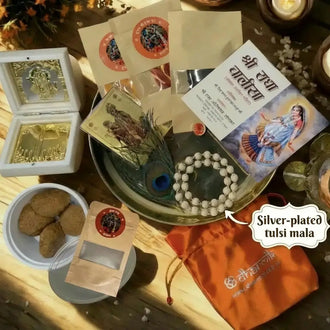
Maa Shailputri, daughter of the Himalayas, is worshipped on the first day. Pure cow's ghee is offered at her feet, and prasad made from ghee such as halwa or laddoo is prepared. Ghee is the most fundamental sattvic offering in Hindu tradition and is directly associated with health and vitality. A tulsi mala is ideal for jap on Day 1—108 repetitions of the Shailputri mantra at the start of Navratri set the tone for all nine days.
Day 2 – Sugar or Mishri for Maa Brahmacharini
Maa Brahmacharini embodies penance, simplicity, and unwavering devotion. As a goddess who preferred the simplest life, her bhog reflects her nature—plain sugar, mishri, or fresh fruits. No elaborate preparation is needed. Offer sugar with fruits and distribute as prasad. This bhog is believed to bring longevity and family well-being—the simplicity of the offering is itself the spiritual teaching.
Day 3 – Milk or Kheer for Maa Chandraghanta
The warrior goddess with a crescent moon on her forehead removes fear and negativity. Milk, kheer, or any milk-based sweet is her preferred bhog. Offering kheer—made from rice, full-fat milk, and sugar—is considered especially pleasing to her. Distribute it among Brahmins and family. This bhog eases sorrows and invokes her protection against negative energies.

Day 4 – Malpua for Maa Kushmanda
Maa Kushmanda is the cosmic creator—the goddess who created the universe through her divine smile. Her bhog is malpua, a sweet pancake made from flour, milk, and sugar, fried in ghee. Prepare malpua and offer it during morning puja, then distribute it among family and neighbours. It is one of the more elaborate offerings in the Navratri prasad list and is associated with happiness and prosperity.
Day 5 – Banana for Maa Skandamata
Maa Skandamata, the mother of Lord Kartikeya, represents nurturing and protective motherhood. Her bhog is the banana: simple, nourishing, and widely available. Offer fresh bananas and distribute them as prasad. This is particularly significant for parents praying for their children’s health. Those seeking wisdom and guidance in important life decisions find Day 5’s puja especially meaningful.
Day 6 – Honey for Maa Katyayani
Maa Katyayani is the fierce warrior form of Durga. Her bhog is pure, raw honey. In tradition, unmarried women who pray for a good partner specifically worship her on this day. The offering of honey is associated with sweetness and the removal of life’s obstacles. A fragrance like Amrit Jal—Ganga Jal-based and completely alcohol-free—helps keep the ritual environment sattvic throughout the day’s worship.
Day 7 – Jaggery for Maa Kalaratri
Maa Kalaratri is the most intense form of Durga—fearless, dark-complexioned, and the destroyer of all evil. Her bhog is jaggery (gud) or sweets made from jaggery. Offer it and distribute it among Brahmins, family, and neighbours. This offering invokes her protection and destroys fear—one of the most powerful blessings in the entire nine-day cycle.
Day 8 – Coconut for Maa Mahagauri
Day 8 is Durga Ashtami—the most significant single day of Navratri. Maa Mahagauri represents purity, grace, and fulfilment. Her bhog is fresh coconut or coconut-based sweets like nariyal laddoo. On this day, Kanya Puja is performed—nine young girls are worshipped as living forms of the Goddess.
In 2026, Durga Ashtami falls on March 26, and the Sandhi Puja window—the most powerful 48-minute period of the festival—falls between 11:24 AM and 12:12 PM.

Day 9 – Sesame + Halwa-Puri-Chana for Maa Siddhidatri
The ninth day belongs to Maa Siddhidatri—the granter of all siddhis. Her bhog includes sesame seeds (til) along with the classic halwa, puri, and kala chana. This is prepared for Kanya Puja and distributed to all.
In 2026, Day 9 (March 26) also coincides with Ram Navami, making this final day’s offering carry the combined energy of Maa Siddhidatri’s completion and Lord Ram’s birth—a rare and exceptionally auspicious convergence.
Essential Rules for Preparing Navratri Bhog
Every bhog must follow these guidelines to preserve its sanctity:
- No onion or garlic—both are tamasic and avoided during Navratri
- No non-vegetarian items—all bhog must be strictly sattvic
- Use rock salt (sendha namak) instead of regular salt
- Cook with pure cow’s ghee wherever possible
- Bhog must be freshly prepared on the same day it is offered
- Always offer bhog before eating—distribute it as prasad only after offering
The intention behind the offering matters as much as the offering itself. Prepare with a clean mind, a clean kitchen, and a spirit of devotion—not just to complete a ritual.
Frequently Asked Questions
Q1. What is the most important bhog in the Navratri bhog list?
All nine bhogs carry equal significance, but Ashtami (Day 8) and Navami (Day 9) are the most widely observed. The coconut offering on Ashtami and halwa-puri-chana on Navami are the most commonly prepared across India.
Q2. Can I offer the same bhog every day if I cannot prepare different items?
Yes. Panchamrit—milk, curd, ghee, honey, and sugar—is a universal offering acceptable for all nine forms of Maa Durga.
Q3. What if I miss a day’s specific bhog?
Missing one day does not invalidate your practice. If circumstances prevent a specific offering, flowers, water, and sincere prayer are always accepted.
Q4. Why is ghee the bhog for Day 1?
Ghee is the most fundamental sattvic offering in Hindu puja—used in havan, abhishek, and prasad. Maa Shailputri, as the most grounded form of Durga, is pleased by this pure, elemental offering.
Q5. Is Kanya Puja performed on Day 8 or Day 9?
Kanya Puja is traditionally performed on Durga Ashtami (Day 8), Maha Navami (Day 9), or both. The choice depends on family tradition and regional practice.

Nine Offerings, Nine Lessons
The Navratri bhog list is not just a food calendar.
Ghee on Day 1 teaches gratitude for health.
Sugar on Day 2 teaches simplicity.
Honey on Day 6 teaches sweetness even in intensity.
Sesame on Day 9 teaches surrender.
Nine days. Nine offerings. Nine ways of showing up with intention.
Conclusion
Navratri is not just about rituals—it is about intention, discipline, and devotion. Each day’s bhog is a small yet powerful way to connect with Maa Durga’s different forms and energies. Whether you follow every offering or keep it simple, what truly matters is the sincerity behind it. When prepared with faith and offered with gratitude, even the simplest bhog becomes a complete prayer.
Written by: Nayan Khetawat