
Ram Navami Shlok in Hindi: Ram Stuti, Mantras & Meaning
There is something deeply personal about Ram Navami. It is not just a festival marked on the calendar; it is the one day when millions of devotees across the world pause, fold their hands, and feel an invisible thread connecting them to something ancient and pure. And at the heart of that connection are the words. The Ram Navami shlok has been passed down through generations, not just as religious text, but as lived experience.
Whether you are someone who grew up hearing these shlokas at home or someone who is exploring them for the first time, this guide brings you 8 carefully chosen Sanskrit mantras and Ram Stuti with their transliteration and meaning. So every word you chant carries intention, not just sound.

What Are Ram Navami Shlokas?
Ram Navami shlokas are sacred Sanskrit verses dedicated to Lord Shri Ram, chanted on the occasion of his birth anniversary celebrated on the ninth day (Navami) of Shukla Paksha in the Chaitra month. The most widely recited ones include the Ram Stuti, Ram Ashtakam, dohas from Ramcharitmanas, and the Taraka Mantra.
These shlokas describe Ram's virtues, divine form, and his role as the protector of dharma, and chanting them is considered one of the most auspicious acts on Ram Navami.
Why Ram Navami Holds a Different Kind of Weight
Ram Navami is not simply the birthday of a god. It is the day the universe chose to send a reminder that truth is worth protecting, that love is worth sustaining, and that duty, however difficult, is worth fulfilling.
Lord Ram lived every role with complete integrity. As a son, he honored his father's word above his own comfort. As a husband, he stood by Sita through exile. As a king, he chose the welfare of his people over personal happiness.
These are not mythological abstractions; they are human ideals that still hold up today.
On this day, devotees across India:
- Begin the morning with Ram naam jap and shlok paath
- Perform a special puja with panchamrit abhishek
- Observe a fast and break it with prasad after aarti
- Gather in temples for akhanda Ramcharitmanas paath
- Share the joy of the festival with family and community
The shlokas and mantras are the backbone of all of this. Let us now go through them one by one.
Ram Stuti by Tulsidas – Shri Ramchandra Kripalu Bhajaman
This Ram Stuti was composed by the great saint-poet Tulsidas and is sung in homes and temples across India, particularly on Ram Navami. It paints a complete picture of Ram's divine form, his qualities, and ends with Tulsidas's personal prayer for grace.
Stanza 1
Sanskrit
श्री रामचन्द्र कृपालु भजमन, हरण भव भय दारुणम्।
नव कञ्ज लोचन कञ्ज मुख, कर कञ्ज पद कञ्जारुणम्॥
Transliteration
Shri Ramchandra Kripalu Bhajaman, Harana Bhava Bhaya Darunam.
Nav Kanja Lochana Kanja Mukha, Kar Kanja Pad Kanjarunam.
Meaning
O mind, worship the merciful Shri Ramchandra who destroys the terrible fear of worldly existence. His eyes are like fresh lotuses, his face is like a lotus, his hands are lotus-like, and his feet glow with the redness of a blooming lotus.

Stanza 2
Sanskrit
कन्दर्प अगणित अमित छबि, नव नील नीरद सुन्दरम्।
पट पीत मानहुँ तड़ित रुचि, शुचि नौमि जनक सुतावरम्॥
Transliteration
Kandarp Aganit Amit Chabi, Nav Nil Nirad Sundaram.
Pat Peet Manahu Tadit Ruchi, Shuchi Naumi Janak Sutavaram.
Meaning
His beauty surpasses countless gods of love, immeasurable and beyond comparison. His form resembles a fresh dark rain cloud, deep and beautiful. His yellow garment shines like lightning against that dark complexion. I bow to that pure and radiant husband of Janaki (Sita).
Stanza 3
Sanskrit
भजु दीनबन्धु दिनेश दानव, दैत्य वंश निकन्दनम्।
रघुनन्द आनन्दकन्द कोशलचन्द, दशरथ नन्दनम्॥
Transliteration
Bhaju Dinabandhu Dinesh Danav, Daitya Vansh Nikandanam.
Raghunand Anandakand Koshalchand, Dasharath Nandanam.
Meaning
Worship him, the friend of the helpless, the sun among men, the destroyer of the demon and Daitya clans. He is the joy of the Raghu dynasty, the ocean of bliss, the moon of Kosala, and the beloved son of Dasharatha.
Stanza 4
Sanskrit
शिर मुकुट कुण्डल तिलक चारु, उदारु अंग विभूषणम्।
आजानुभुज शर चाप धर, संग्राम जित खर दूषणम्॥
Transliteration
Shir Mukut Kundal Tilak Charu, Udaru Ang Vibhushanam.
Ajanubhuj Shar Chap Dhar, Sangram Jit Khar Dushanam.
Meaning
He wears a beautiful crown, earrings, and a tilak, his entire form adorned with divine ornaments. His long arms reach down to his knees, and he holds a bow and arrow. He is the one who defeated Khar and Dushan in battle.
Stanza 5
Sanskrit
इति वदति तुलसीदास शंकर, शेष मुनि मन रञ्जनम्।
मम हृदय कञ्ज निवास कुरु, कामादि खल दल गञ्जनम्॥
Transliteration
Iti Vadati Tulsidas Shankar, Shesh Muni Man Ranjanam.
Mam Hriday Kanj Nivas Kuru, Kamadi Khal Dal Ganjanam.
Meaning
Thus speaks Tulsidas, he who delights the hearts of Shankar, Sheshnag, and all the great sages. O Ram, please make your home in the lotus of my heart and destroy the wicked forces of lust, ego, and desire that reside within me.

4 More Shlokas Every Devotee Should Know on Ram Navami
Beyond the Ram Stuti, there are a few other shlokas that carry immense significance on Ram Navami, each from a different corner of the tradition but all pointing toward the same devotion.
Shloka 1 – Mangal Bhavan (Ramcharitmanas Mangalacharan)
Sanskrit
मंगल भवन अमंगल हारी।
द्रवउ सो दसरथ अजिर बिहारी॥
Transliteration
Mangal Bhavan Amangal Haari.
Dravau So Dasarath Ajir Bihaari.
Meaning
May He who is the very abode of auspiciousness and the destroyer of all that is inauspicious, the one who once played freely in King Dasharatha's courtyard, be moved with compassion and bless us with his grace.
This is the most beloved opening shlok of Ram Navami celebrations.
Shloka 2 – Ram Raksha Stotra (Sage Budha Koushika)
Sanskrit
रामो राजमणिः सदा विजयते रामं रमेशं भजे।
रामेणाभिहता निशाचरचमू रामाय तस्मैनमः॥
Transliteration
Ramo Rajmanih Sada Vijayate, Ramam Ramesham Bhaje.
Ramenabhihata Nishachara Chamu, Ramaya Tasmai Namah.
Meaning
Ram, the jewel among kings, is eternally victorious. I worship Ram, the lord of Lakshmi. He who destroyed the entire army of demons, to that Ram I offer my complete salutations.
Shloka 3 – Valmiki Ramayana
Sanskrit
रामो विग्रहवान् धर्मः साधुः सत्यपराक्रमः।
राजा सर्वस्य लोकस्य देवानाम् इव वासवः॥
Transliteration
Ramo Vigrahavan Dharmah Sadhuh Satya Parakramah.
Raja Sarvasya Lokasya Devanam Iva Vasavah.
Meaning
Ram is dharma itself in human form. He is noble, and his courage is rooted in truth. He is the king of all the worlds, just as Indra is the sovereign of the gods.

Shloka 4 – Sharana Shlok
Sanskrit
लोकाभिरामं रणरङ्गधीरं राजीवनेत्रं रघुवंशनाथम्।
कारुण्यरूपं करुणाकरं तं श्रीरामचन्द्रं शरणं प्रपद्ये॥
Transliteration
Lokaabhiramam Ranarangadheeram, Rajivnetram Raghuvansha Naatham.
Karunya Roopam Karunakaram Tam, Shri Ramachandram Sharanam Prapadye.
Meaning
He who brings joy to all the worlds, who remains fearless on the battlefield, whose eyes are like lotuses, who is the lord of the Raghu dynasty, who is the very form of compassion—to that Shri Ramchandra, I fully surrender myself.
The Puja Essentials for Ram Navami
Before the shlokas come the preparations. Here is everything you need for a proper Ram Navami puja:
| Puja Item | Purpose |
|---|---|
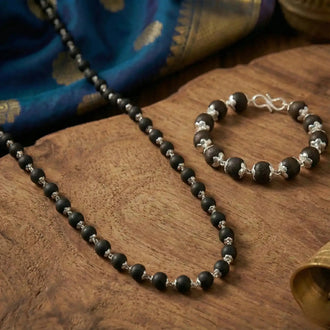
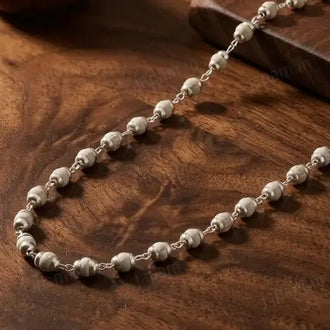
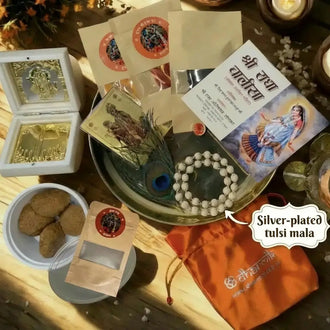
| Tulsi Mala | Tulsi is deeply sacred to Lord Ram – used for jap and offered during puja |
| Panchamrit | Milk, curd, ghee, honey, and sugar – for abhishek of the idol |
| Diyas / Incense | To purify the space and mark the beginning of puja |
| Roli / Sindoor | For tilak on the idol and on devotees |
| Marigold / Lotus Flowers | Both are considered Ram's preferred flowers |
| Prasad (Panjiri / Fruits) | Bhog offered at the close of puja |
There is something different about performing puja with items that carry genuine intention behind them. Many devotees who want to ensure the authenticity of their samagri – particularly a real Tulsi Mala for jap – turn to platforms like Dharmik, where items are sourced and blessed in Vrindavan before reaching your home. In puja, the small details matter most.
How to Do Ram Navami Shlok Paath the Right Way
Step 1 – Begin at Brahma Muhurta (4–6 AM)
This is the most auspicious time for any spiritual practice. Even if you cannot wake up that early, sunrise works beautifully.
Step 2 – Bathe and Wear Clean, Preferably Yellow Clothing
Yellow is associated with Shri Ram and is considered auspicious on Ram Navami.
Step 3 – Set Up Your Puja Space
Clean the area, light a diya, place Ram's idol or image, and arrange flowers and incense.
Step 4 – Begin With the Core Mantra
Chant "Om Shri Ramaya Namah" 108 times with a Tulsi Mala. Let each bead be a moment of full presence.
Step 5 – Recite the Ram Stuti
Go through all five stanzas of "Shri Ramchandra Kripalu Bhajaman" slowly and with understanding.
Step 6 – Move Into the Additional Shlokas
Mangal Bhavan, Ram Raksha, Narad's verse, and close with the Sharana Shlok.
Step 7 – Offer Panchamrit and Flowers
The ritual bathing of the idol – the most intimate moment of the puja.
Step 8 – Aarti and Prasad
Sing Ram Navami aarti and distribute prasad to close the celebration.

What Most People Get Wrong About Ram Navami Shlokas
1. Reciting Without Understanding
Many people rush through shlokas without knowing what they mean. When you know that "Mangal Bhavan Amangal Haari" is a direct request for Ram's grace to dissolve what is inauspicious in your life, the words land very differently.
2. Treating It as a Once-a-Year Practice
Ram naam is not meant to be seasonal. The tradition recommends chanting "Om Shri Ramaya Namah" daily – even just 108 times. The accumulation of that devotion over months and years is what transforms the practice from ritual into experience.
3. Focusing on Ritual Over Intention
The finest Tulsi Mala, the freshest flowers, the most elaborate puja – none of it replaces genuine bhava (feeling). Ram Navami is an invitation to feel something, not just perform something.
4. An Interesting Fact Worth Knowing
The name "Ram" is called the Taraka Mantra – the mantra that helps the soul cross the ocean of existence. "Ra" is the eighth name in Vishnu Sahasranama; "Ma" is the eighth name in Shiva Sahasranama. Together, Ram becomes the meeting point of both traditions – a name that transcends all divisions.
Frequently Asked Questions
Q1. Which shloka should I chant first on Ram Navami?
Begin with "Mangal Bhavan Amangal Haari" – it is the traditional opening of Ram Navami celebrations, drawn directly from Tulsidas's Ramcharitmanas. After this, move into the full Ram Stuti, followed by the other shlokas shared above.
Q2. Can women recite Ram Navami shlokas and mantras?
Absolutely. Bhakti has no gender. Women can and do perform Ram Navami puja, recite all shlokas, and observe fasts with complete spiritual authority. The tradition has always welcomed devotion in every form.
Q3. What is the difference between Ram Stuti and Ram Stuti lyrics?
They refer to the same thing. "Ram Stuti lyrics" is simply a more commonly searched phrase used to find the text of the Ram Stuti – most often referring to Tulsidas's "Shri Ramchandra Kripalu Bhajaman", which we have covered in full above.
Q4. Is there a specific time for Ram Navami shlok paath?
Brahma Muhurta (before sunrise) is most auspicious for daily paath. However, the Madhyahna period (midday) is specifically significant on Ram Navami itself, as Lord Ram is believed to have been born at noon. Many temples hold their most important celebrations at this time.
Q5. How many times should I chant the Ram mantra on Ram Navami?
108 repetitions using a Tulsi Mala is the traditional recommendation. This number carries deep significance across Hindu, Buddhist, and yogic traditions alike. For deeper sadhana on Ram Navami specifically, multiples of 108 are followed by dedicated devotees.

A Final Thought
Ram Navami is a reminder that the qualities we admire in Ram – patience, courage, compassion, and an unshakeable commitment to what is right – are not divine exclusives. They are human possibilities. Every shlok you chant on this day is a small step toward remembering that.
Recite these shlokas not just with your voice, but with awareness. Light a diya that stays lit through the whole puja. Sit with your family. Let the day be slower and quieter than the ones around it.
That is what Ram Navami is truly for.
Written by: Nayan Khetawat